How to choose the viscosity when adding dimethyl silicone oil to toilet cleaners to enhance lubrication and antifouling effects?
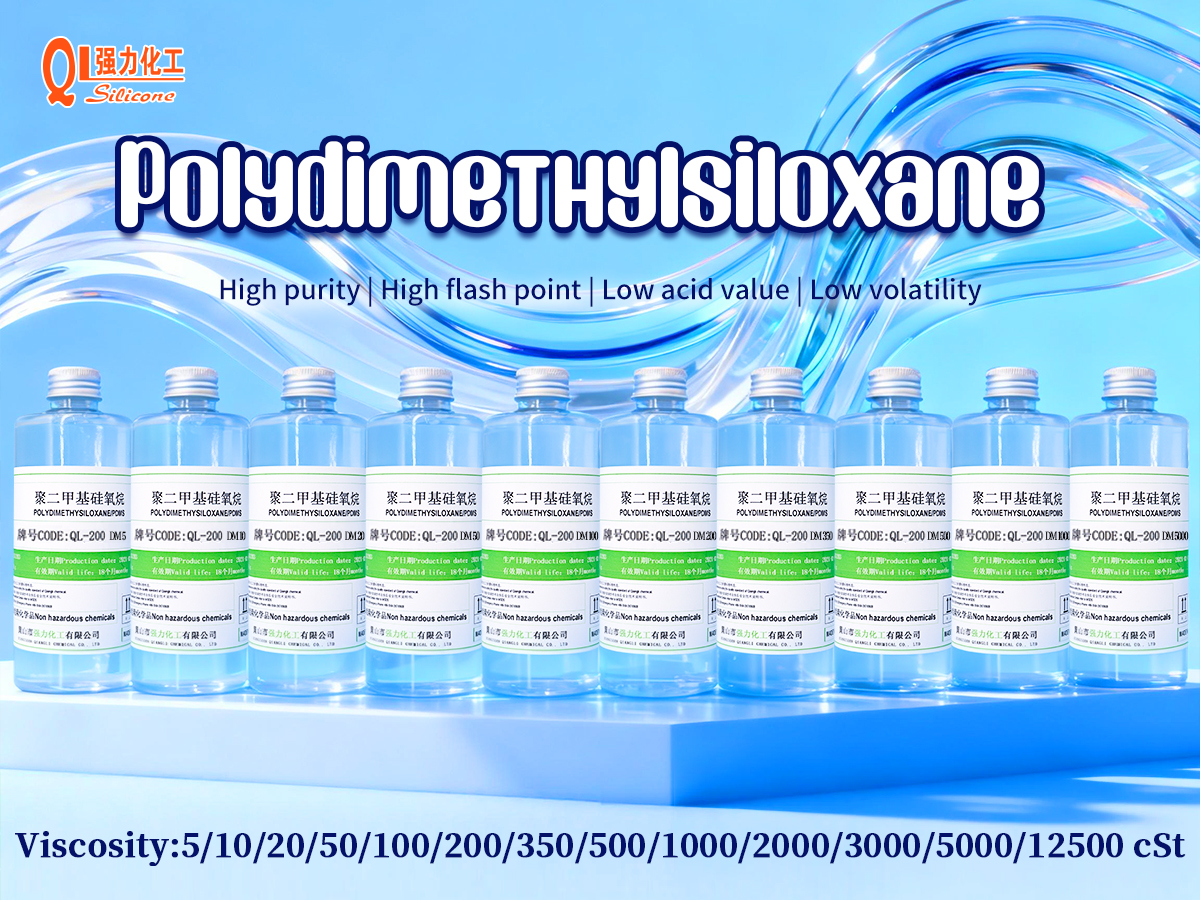
When adding dimethyl silicone oil to toilet cleaners for improved lubrication and antifouling performance, the recommended viscosity range is 100-350 centistokes (cSt). Below is a comprehensive guide based on core principles and practical applications:
-
Low viscosity (50-200 cSt): Offers strong fluidity, disperses quickly in cleaners, boosts cleaning efficiency, and reduces foam generation. For example, 100 cSt dimethyl silicone oil can effectively penetrate gaps on toilet surfaces to assist in removing stubborn stains while maintaining good pumpability of the solution.
-
Medium-high viscosity (350 cSt): Delivers better film-forming properties, forming a long-lasting hydrophobic protective layer on ceramic toilet surfaces to extend cleaning effects and reduce water stain residue. 350 cSt silicone oil is commonly used in mold release agents and damping oils, with a viscosity that ensures lubricity without excessive thickness causing uneven application.
-
Balanced demand: Toilet cleaners need to balance cleaning power and long-term protection. The 100-350 cSt range achieves this balance, making it particularly suitable for frequent-use scenarios.
-
Industry standard reference: According to HG/T 2366-1992, 100 cSt and 350 cSt are common specifications for dimethyl silicone oil, corresponding to models "201-100" and "201-350" respectively. Their viscosity stability and chemical inertness meet industrial application requirements. For instance, 100 cSt silicone oil is widely used for lubrication in pressure gauges and high-pressure gas cylinders, demonstrating reliability in dynamic environments.
-
Practical formula application: In patented formulas for toilet cleaning gels, dimethyl silicone oil (3-5 parts) is used as a lubricant, combined with surfactants and bleaches to achieve decontamination and antifouling functions. While viscosity is not explicitly specified, referencing the preference for 350 cSt in similar products (e.g., leather conditioners), medium-high viscosity is inferred to perform better in such formulas.
-
Surfactant adaptability: Dimethyl silicone oil is most compatible with non-ionic surfactants (e.g., PEG-12 Dimethicone), which can stably disperse it in aqueous systems through emulsification to avoid stratification or precipitation. If the formula contains anionic surfactants (e.g., sodium laurate), low-viscosity silicone oil below 100 cSt is recommended to reduce interfacial tension conflicts.
-
pH stability and chemical resistance: Dimethyl silicone oil maintains maximum stability in neutral to weakly acidic environments (pH 5-7), suitable for the formulation of most toilet cleaners. High-viscosity silicone oil (e.g., 350 cSt) performs better in strong oxidizing systems containing bleaches, being less prone to chemical degradation that impairs performance.
-
Dosage control: The recommended addition amount of dimethyl silicone oil is 0.1%-0.5% of the total mass of the cleaner. Excess dosage may cause excessive surface lubrication, affecting flushing efficiency; insufficient dosage will result in insignificant protective performance.
-
Mixing process: It is advisable to add silicone oil at the later stage of cleaner preparation and stir at low speed (<200 rpm) to avoid damaging the molecular chain structure due to shear force. High-viscosity silicone oil can be pre-diluted with a small amount of solvent (e.g., ethanol) before gradual addition to the system.
-
Temperature adaptability: For products used in low-temperature environments (e.g., winter), prioritize low-viscosity silicone oil below 100 cSt to prevent reduced fluidity caused by increased viscosity.
-
Cost-effective option: Domestic models "201-100" or "201-350" (e.g., from Shandong Dayi Chemical, Zhejiang Rongli) offer high cost-performance, complying with HG/T 2366-1992 standards for daily cleaning use.
-
High-performance demand: Imported brands such as Dow Corning PMX-200 series (100 cSt and 350 cSt) feature higher purity (>99.9%) and lower volatility (≤1%), suitable for high-end long-acting cleaners.
-
Compatibility verification: Conduct stability tests before mass production, observing whether the solution stratifies, clouds, or changes in viscosity after 7 days of storage at room temperature and 40℃.
Considering cleaning efficiency, protective durability, and formula compatibility, 100-350 cSt dimethyl silicone oil is the ideal choice for toilet cleaners. Low viscosity (100 cSt) is suitable for products focusing on rapid decontamination, while medium-high viscosity (350 cSt) is preferred for long-acting antifouling formulas. By reasonably controlling the dosage and optimizing the mixing process, the overall performance of the product can be significantly improved.





 Links
Links